
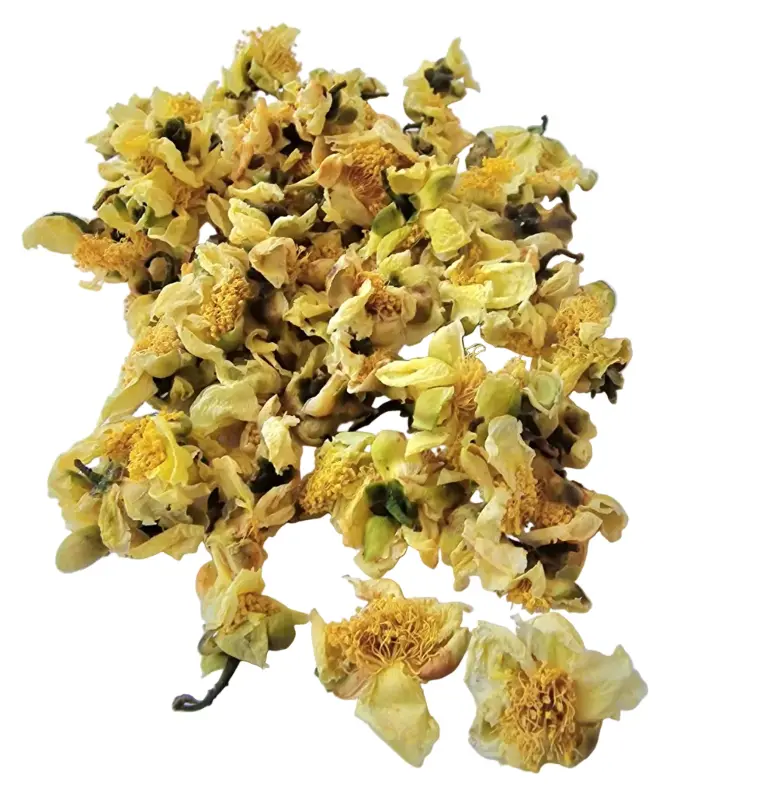

Tea flowers are a singular joy for tea lovers. I suspected most of you had probably never tried them, and when I visited Dirk and Nina of Cha Camelia in northern Portugal I saw the perfect opportunity to share them. They treat the flowers with the same care and intention as their tea.
Their bushes grow in a vibrant, biodiverse garden just minutes from the Atlantic. The result: flowers that are beautiful and deeply expressive of their environment. Delicate, aromatic, and quietly captivating, they offer a chance to meet a different side of the tea plant. They represent a deeper philosophy: using the whole plant, honoring each stage of its life cycle, and finding beauty in what usually goes overlooked. The blossoms are carefully hand-harvested at their peak and dried to preserve their fragile aromatics, yielding an infusion that feels both rare and intimate.
Tea flowers are seasonal; they appear fleetingly each autumn and turn the garden into a soft constellation of white petals and golden stamens. Tea flowers have long been appreciated in East Asia but remain relatively unknown elsewhere. Their infusion is light, sweet, and naturally caffeine-free. They are rich in antioxidants, including catechins and polyphenols similar to those found in tea leaves, and in amino acids like L-theanine. Traditionally, tea flowers have been valued for their calming and balancing qualities.You’ll find the liquor silky, with notes of wildflowers, fresh pollen, and a gentle hint of honey. Enjoy!
Preparation: Shiboridashi or teapot: 90°C. 2 g / 120 ml. 1,5 min; 1,5 min; 2min…
Valoraciones
No hay valoraciones aún.